Deep Work
About this book-as-podcast
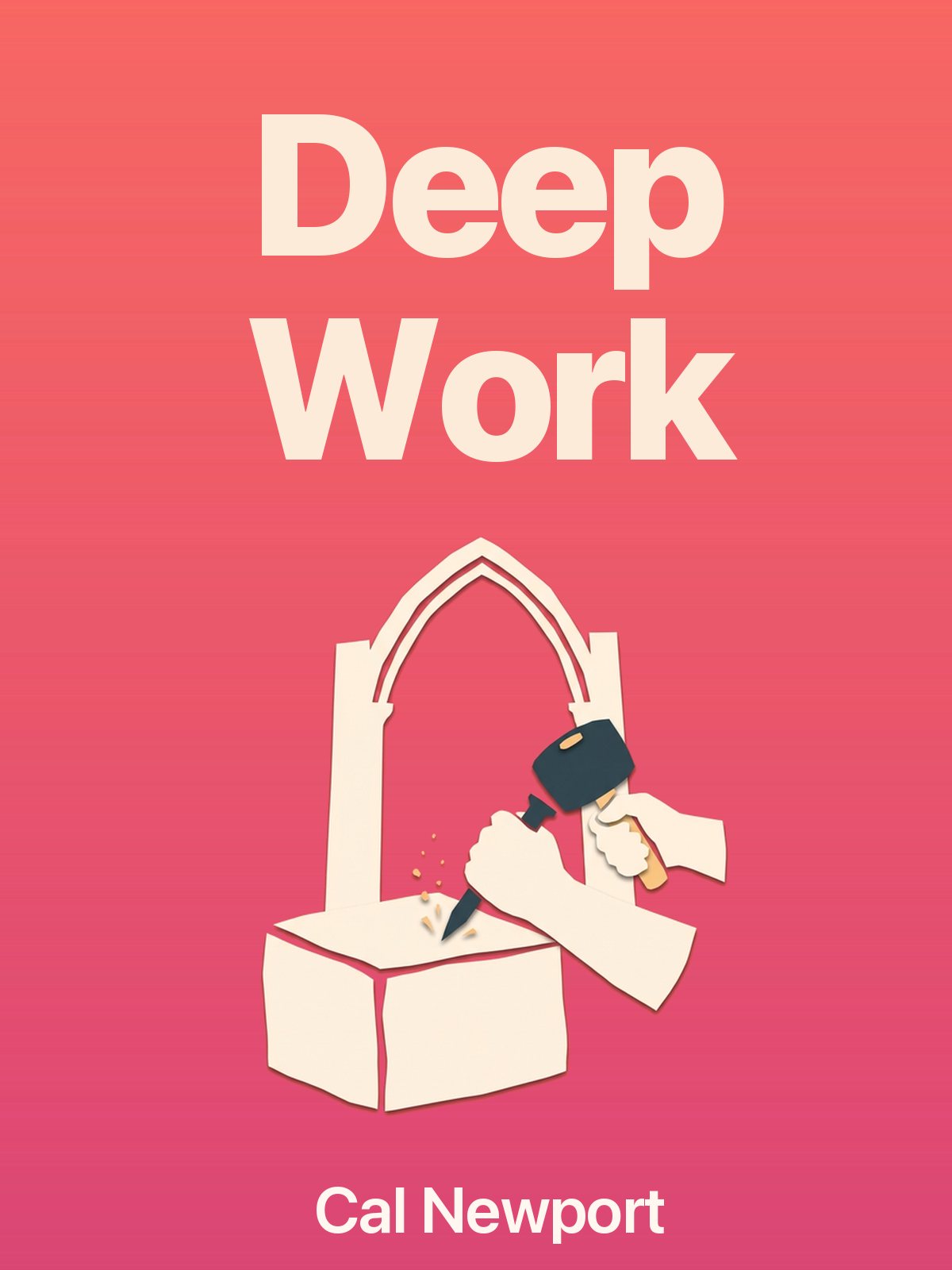
Cal Newport argues that the ability to focus without distraction is growing rare but also more valuable in modern work. Constant connection and shallow tasks take time away from the kind of effort that builds real skill. He offers four rules for protecting and strengthening focused work.
Original, independently created content. Not affiliated with, licensed by, or endorsed by the book's author or publisher.
Questions about Deep Work
What are the four rules of deep work?
Work deeply, by scheduling concentration rather than hoping for it. Embrace boredom, since a mind trained to reach for a phone at every pause cannot sustain focus on demand. Quit social media, or at least judge each tool by whether it earns its cost. And drain the shallows, by shrinking the administrative work that expands to fill whatever time it is given.
What are the key principles of Deep Work?
That concentration is both increasingly rare and increasingly valuable, which makes it economically interesting. That switching tasks leaves attention residue, so fragmented time is worth less than its total suggests. And that depth is a trainable capacity rather than a personality trait, which is why Newport writes about scheduling and rituals rather than motivation.
What is the key takeaway from Deep Work?
That the ability to concentrate without distraction on a hard problem is becoming a competitive advantage precisely because so few people are keeping it. Newport's practical conclusion is to treat attention as a resource with a budget: decide in advance where it goes, protect those blocks, and accept being less responsive as the cost.
What are some examples of deep work?
Writing a difficult chapter, proving a theorem, designing an architecture, learning a language's grammar properly, debugging something genuinely hard. What they share is that quality depends on uninterrupted concentration and that no amount of extra hours in fragments substitutes for it. Answering email and attending status meetings are the counter-examples the book calls shallow work.
Which is better, Atomic Habits or Deep Work?
They solve different problems. Atomic Habits is about making small behaviours stick and works for anything from flossing to running. Deep Work is narrower and more argued: it is about protecting concentration in knowledge work. Read Clear if the problem is starting and continuing; read Newport if the problem is that your days are full but nothing hard gets done.
What are the criticisms of Deep Work?
That the advice assumes a degree of control over your calendar that many jobs simply do not offer, and that Newport's examples skew towards academics and writers with unusual autonomy. Some readers also find the disdain for shallow work overstated, since coordination is real work in most organisations rather than a distraction from it.