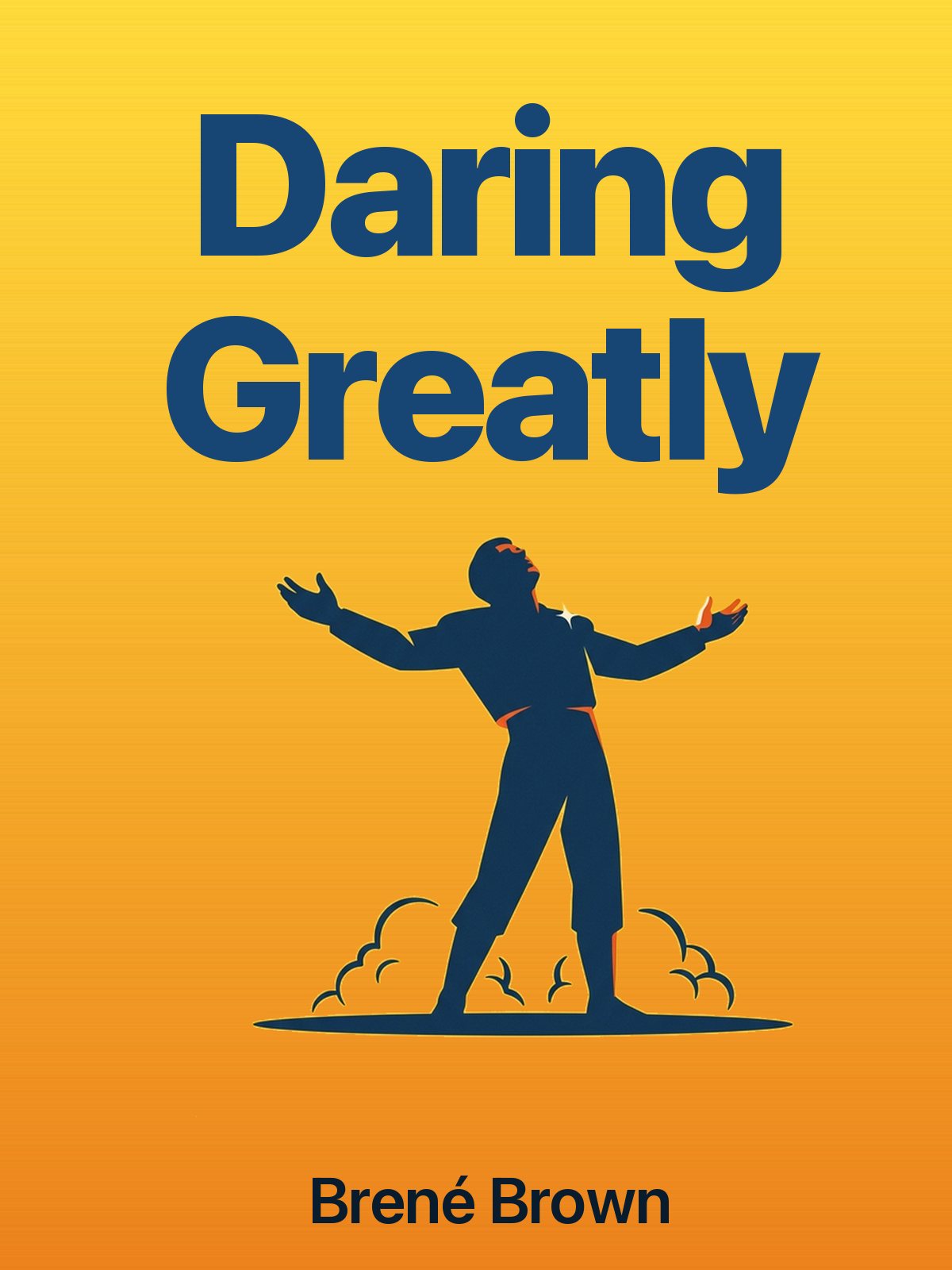
Daring Greatly
About this book-as-podcast
Brené Brown uses a decade of research to argue that being open and exposed takes courage, not weakness. She starts by examining why modern culture leaves people feeling they are never enough. The book then covers shame, the ways people guard themselves, and how being vulnerable can change relationships, parenting, and work.
Original, independently created content. Not affiliated with, licensed by, or endorsed by the book's author or publisher.
Questions about Daring Greatly
What is Daring Greatly by Brené Brown about?
It argues that vulnerability, which most of us treat as weakness, is the thing every quality we admire is actually made of. Courage, creativity, connection and belonging all require exposure to being wrong or rejected. Brown's case rests on years of interview research, and her conclusion is that avoiding vulnerability costs far more than risking it.
What is the difference between shame and guilt?
Guilt is about behaviour, shame is about self. Guilt says you did something bad and tends to push people towards repair; shame says you are bad and tends to push them towards hiding, blaming or lashing out. Brown treats the distinction as practical rather than academic, since shame reliably makes the underlying behaviour worse rather than better.
What does Brené Brown mean by scarcity culture?
The background feeling of never being enough: not successful enough, not thin enough, not certain enough. She argues it is sustained by comparison and by shame, and that it makes vulnerability feel intolerable because there is no slack for being seen falling short. Wholehearted living is her name for the alternative, worthiness that does not have to be earned first.
What is the man in the arena idea in Daring Greatly?
The title comes from a Theodore Roosevelt speech about the person who is actually in the arena, marked by dust and sweat, rather than the critic watching from the stands. Brown uses it as a rule for whose opinion counts: criticism from people not taking the same risk carries no weight, which is what makes stepping into the arena bearable at all.
Is Daring Greatly worth reading?
Yes if the shame-and-vulnerability distinction is new to you, because Brown makes it usable rather than abstract. Less so if you have already seen her talks, which cover the core argument. The research is qualitative and she is candid about that, so read it as carefully gathered interview work rather than as measurement.
Who is Daring Greatly for?
Anyone whose instinct under pressure is to armour up: parents, managers, teachers, and people who present certainty they do not feel. The chapters on leadership and on raising children are the ones readers most often say changed something concrete, since both are settings where hiding vulnerability is normally rewarded.