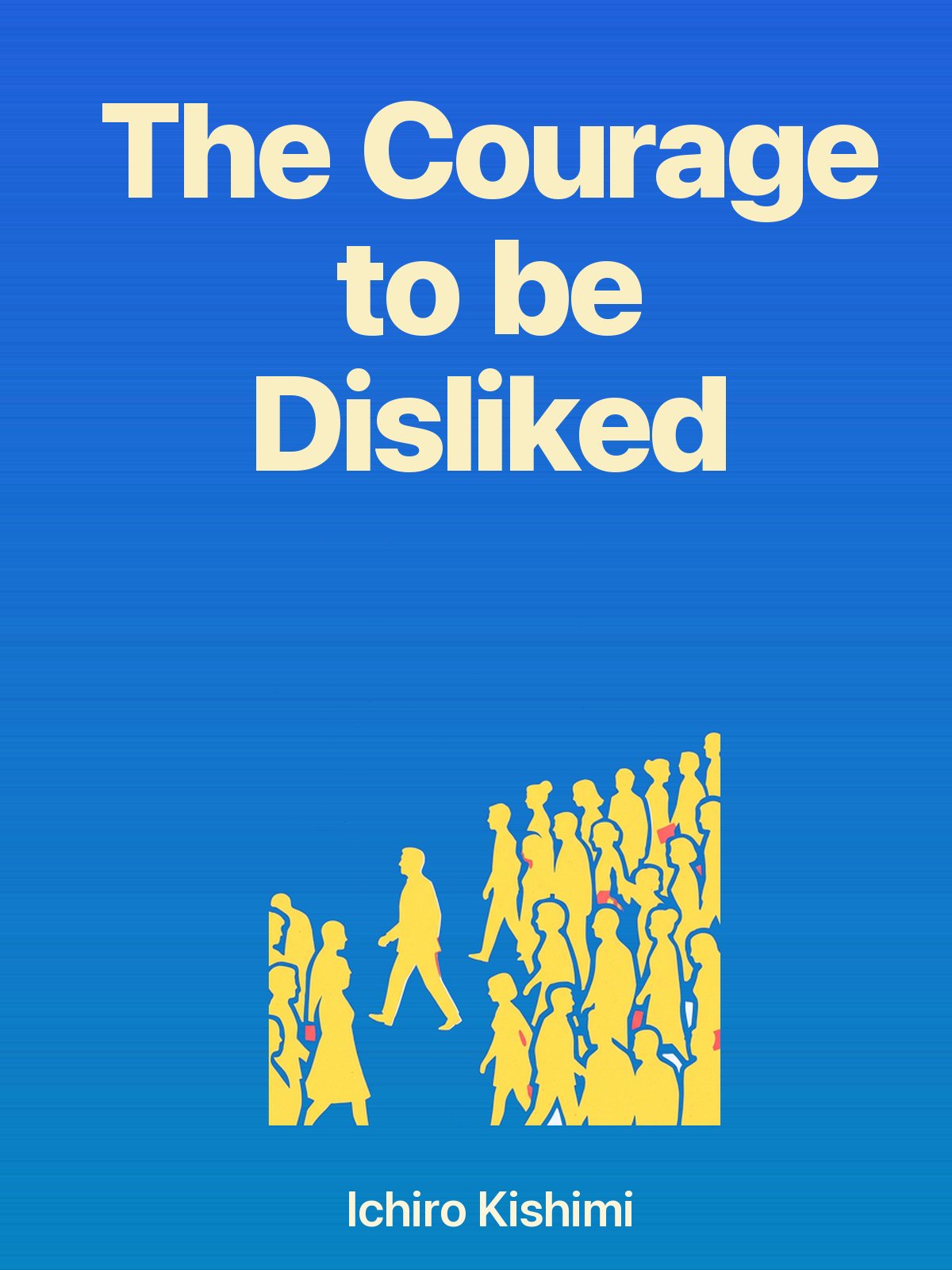
The Courage to be Disliked
About this book-as-podcast
Kishimi and Koga present Adler's ideas as a dialogue between a young man and a philosopher, arguing that trauma does not control you. They claim all personal problems grow from difficult relationships with others. Happiness comes from within, not from other people's approval.
Original, independently created content. Not affiliated with, licensed by, or endorsed by the book's author or publisher.
Questions about The Courage to be Disliked
What is the main point of The Courage to Be Disliked?
That your past does not determine you, and that freedom begins when you stop trading your life for other people's approval. Written as a dialogue between a philosopher and a sceptical young man, it argues that being disliked by some people is the price of living according to your own choices, and that paying it is what the title means by courage.
What psychology is The Courage to Be Disliked based on?
Alfred Adler's, the contemporary of Freud and Jung whose work is far less known in the English-speaking world. The authors are popularising Adlerian ideas rather than presenting their own, which is why the book reads as an introduction to a school of thought rather than as a self-help programme.
What is The Courage to Be Disliked theory?
Its central move is teleology over aetiology: you are pulled by present goals rather than pushed by past causes. Anger is not caused by an insult, it is produced because it serves a purpose. Paired with this is the separation of tasks, the discipline of asking whose problem something actually is, since another person's opinion of you is their task and not yours.
What are the most important lessons in The Courage to Be Disliked?
That trauma does not dictate a life, though the book states this more bluntly than most clinicians would. That the desire for recognition is a trap because it makes other people the authors of your choices. That relationships work better horizontally than in hierarchies of praise and blame. And that contribution to others, rather than approval from them, is where a sense of worth actually comes from.
Is The Courage to Be Disliked worth reading?
It is worth reading if you want a genuinely different frame from the usual self-help vocabulary, and the dialogue form makes a dense philosophy readable. It is worth arguing with too: the flat claim that trauma does not exist as a determining cause is stated more strongly than the evidence supports, and the book is better used as a provocation than as a manual.
Is The Courage to Be Disliked easy to read?
The prose is simple and the dialogue keeps it moving, so it reads quickly. The ideas are the hard part. Several of them contradict assumptions most readers hold about causes, feelings and the past, and the young man in the book objects on the reader's behalf precisely because those objections take some working through.